Introduction
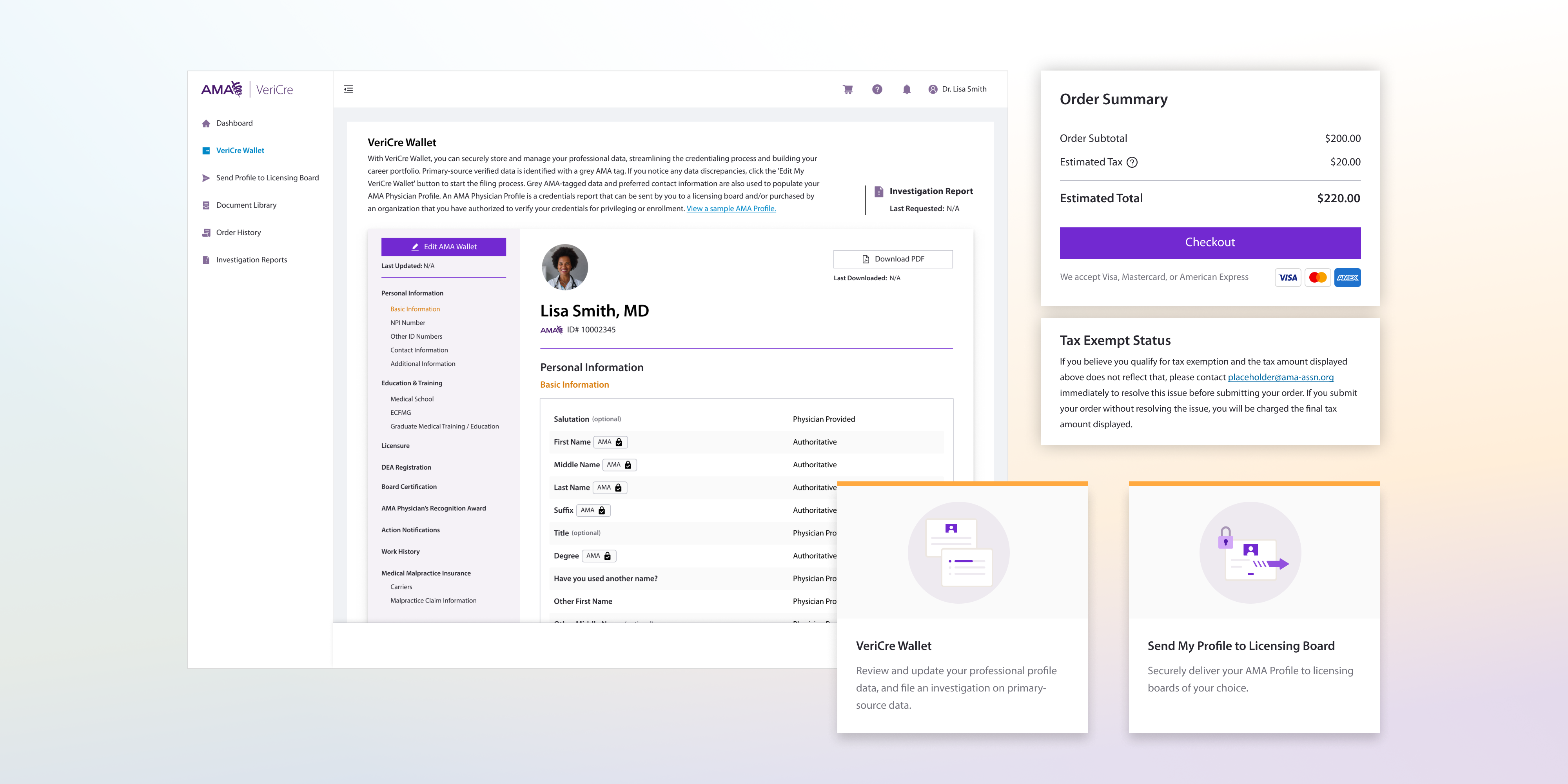
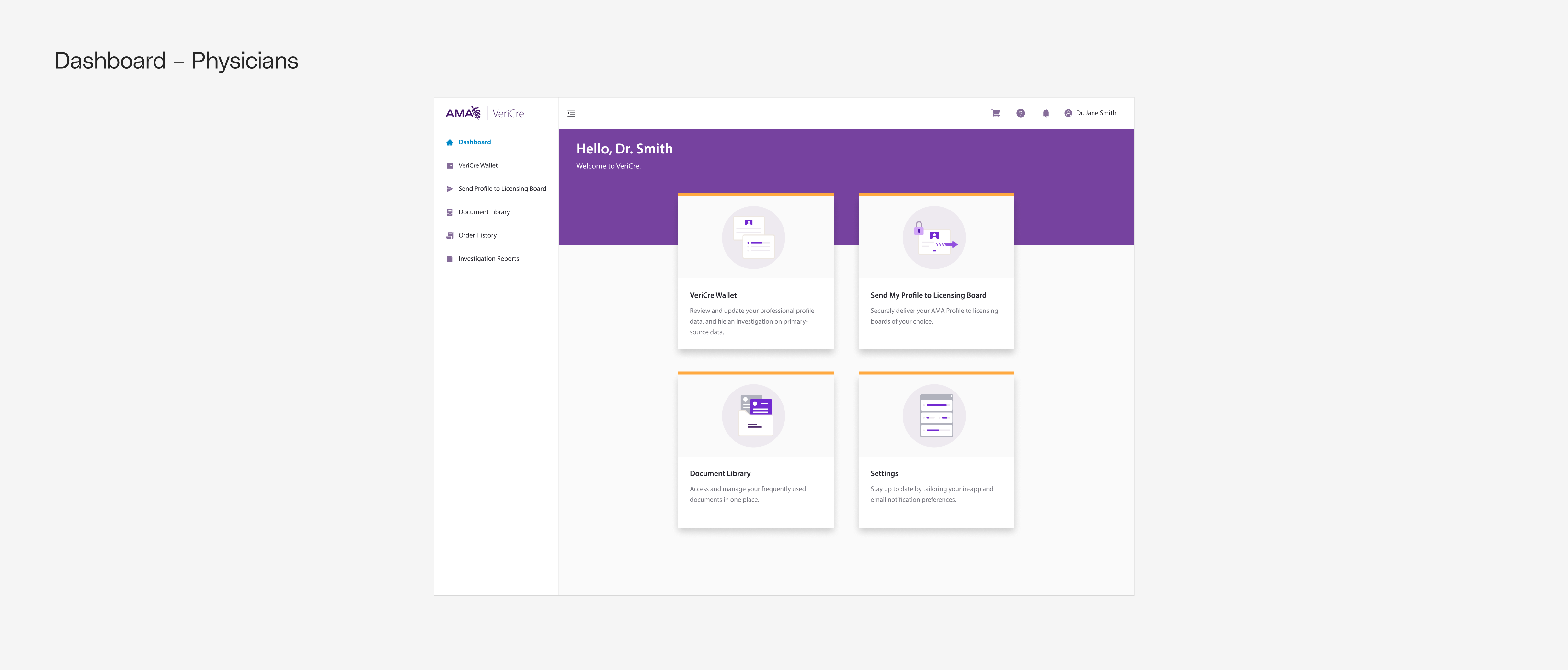
The American Medical Association is a medical association that represents physicians in the USA. They have a platform called VeriCre where physicians and AMA staff can access and manage physician profiles.
I was the main designer to redesign key features of VeriCre, working across a large cross-functional team that included AMA stakeholders, a project manager, and engineers. Design decisions moved through a formal approval chain on the client side, which shaped how I communicated and documented work throughout the engagement.
*Due to confidentiality, information will be kept at a high level.
Summary
About VeriCre
VeriCre serves two user groups: physicians managing their own profiles, and organization administrators who can act on a physician's behalf. This case study focuses on the physician-facing experience.
A physician's profile contains personal information, education and training, certificates, work history, and more. Each piece of data carries one of three states:
- AMA Authoritative: verified by the AMA; changes require a formal verification process
- AMA Prefill: ported in from connected external accounts
- Physician Provided: self-reported information that doesn't require verification
Features
VeriCre Profile
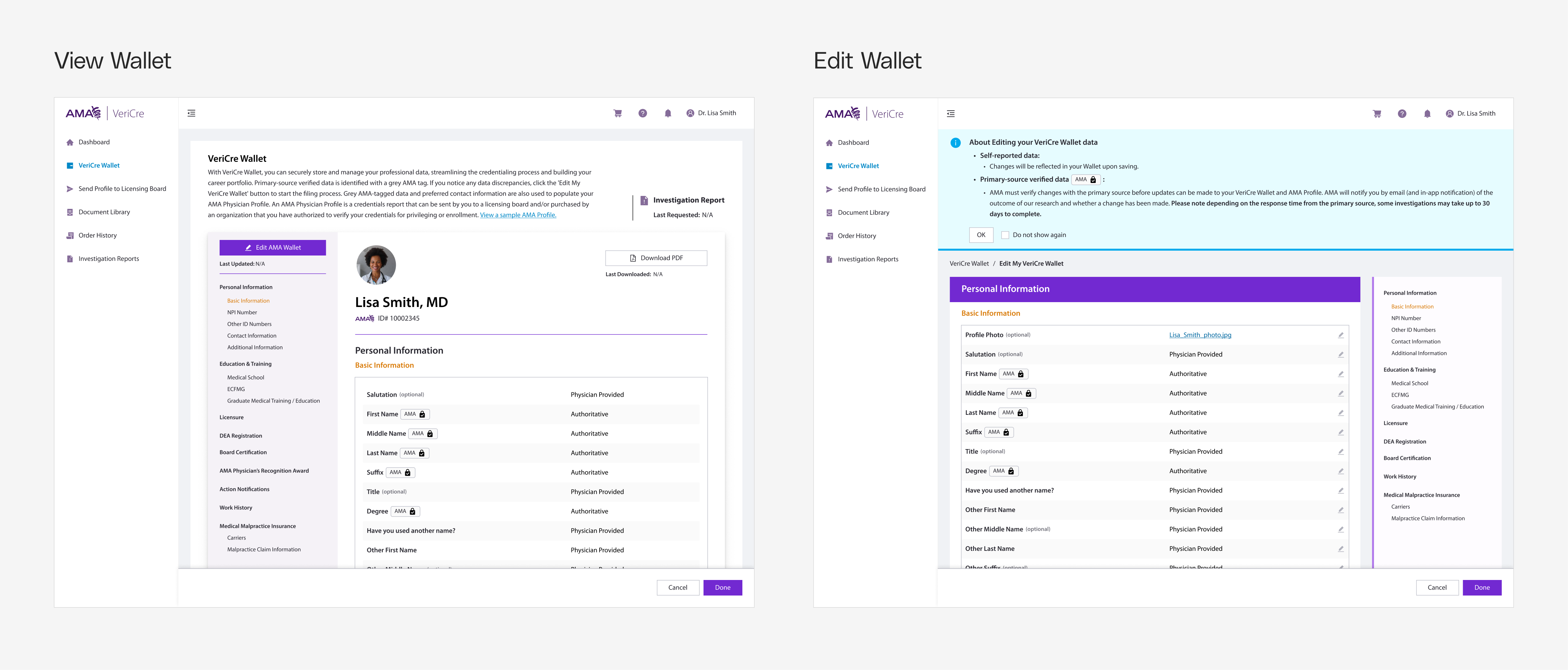
The most complex design challenge was the profile editing flow. On the surface it sounds simple, let physicians edit their information. However, there were overlapping problems to consider:
- How do you display and edit information when different fields have different data states, each with different rules about who can change what?
- How do you handle conditional fields where the options available to a physician change based on what they've already entered?
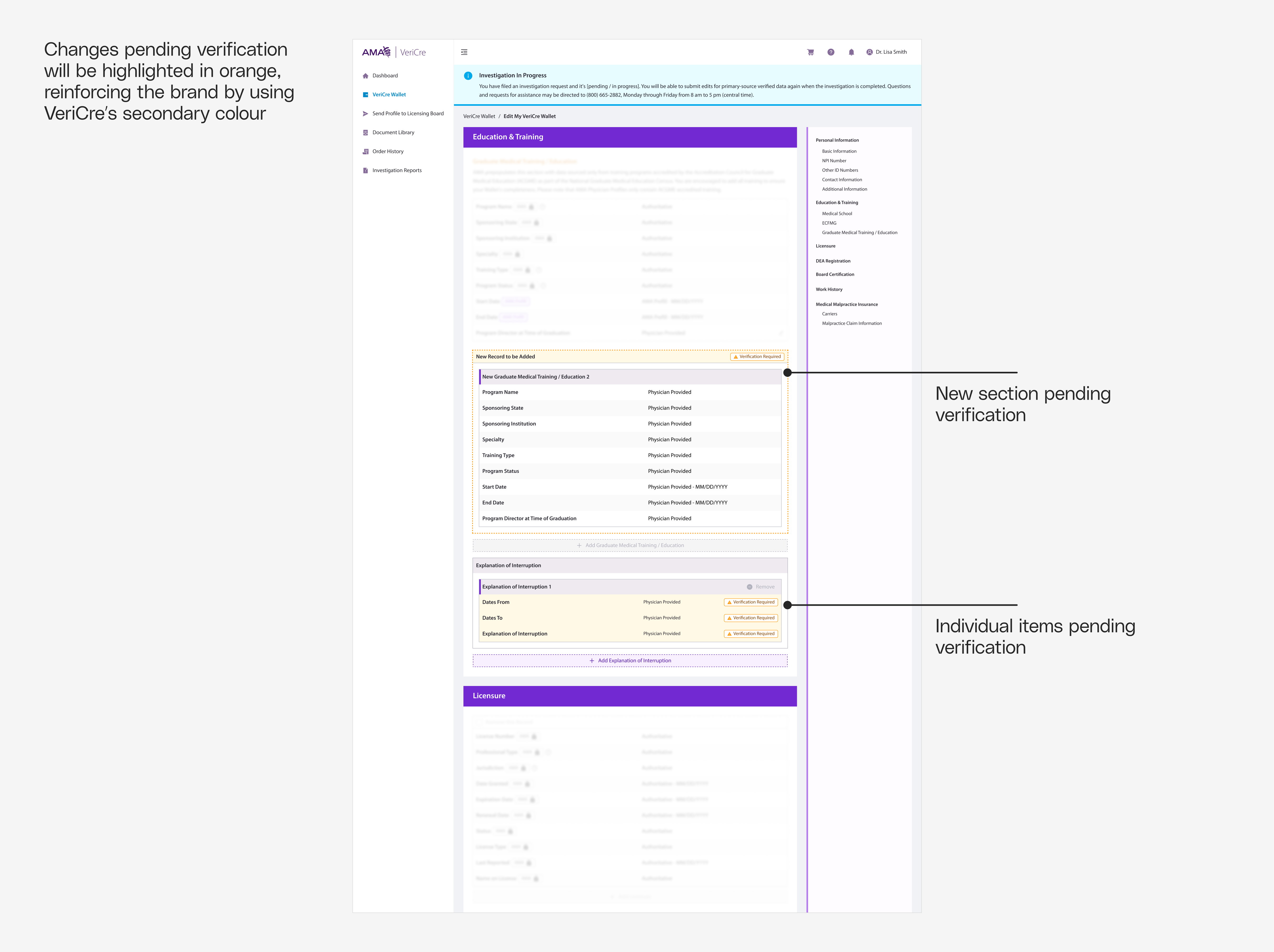
- How do you communicate the status of pending changes, especially for authoritative data that requires AMA verification before it takes effect?
I started by working closely with engineers to map the underlying logic before designing anything. From there I went through multiple design iterations, testing different UI patterns for how edits, states, and pending changes could be surfaced clearly without overwhelming the physician.
The solution used a combination of inline editing and contextual state indicators, keeping the experience straightforward for simple edits while surfacing the right information and guardrails when a change triggered a verification requirement.
Sending a profile to licensing board
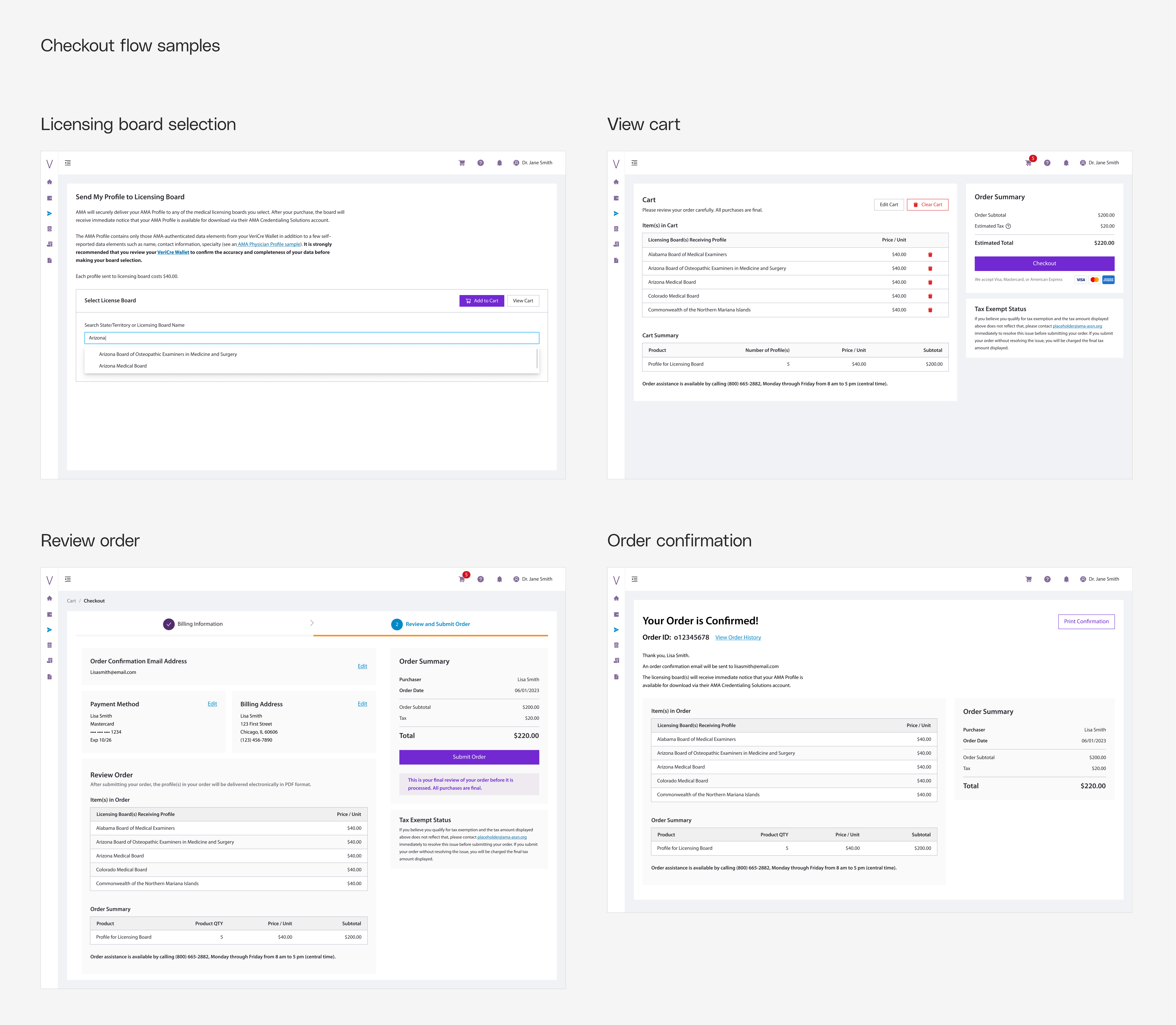
The second feature I worked on was the profile submission process. Physicians select a licensing board, add it to a cart, and complete a checkout that includes a fee. The challenge here was making a formal, high-stakes process feel clear and trustworthy without oversimplifying it. Physicians are submitting verified credentials; the design needed to match the weight of that action.
Reflection
Sizeable projects require constant communication
This was a hefty project that required a lot of communication and collaboration with the product owner, project manager and engineers involved. Design decisions moved through several layers of approval particularly on the AMA stakeholder side. To play my part, I made sure that documentation was kept up-to-date and any changes were to be clearly communicated.